
Trace Former Forest County Owners Through the Deed Chain
A former-owner search in Forest County works like walking a stairway backward. The newest recorded deed is the bottom step. That instrument names a grantor and a grantee. The earlier grantor becomes your next grantee. The legal description must stay the same at every step, since similar names and nearby parcels can create false links in the property records. Digital images reach much farther back than the searchable party metadata. When the name search thins out, switch tools. Let the paper deed books or a courthouse request carry the chain the rest of the way.
| Chain step | Grantor to grantee | Instrument reference | Where to look |
|---|---|---|---|
| Latest deed | Prior owner to current grantee | Deed date and document or book reference | Tapestry or Register of Deeds |
| Previous conveyance | Earlier grantor to the next grantee | Match the legal description | Computer party index, then paper books |
| Tract-book step | Earlier transfer affecting the same land | Parcel or land description | Handwritten tract books through 2012 |
| Historic context | Plat, estate notice, or older county record | Lot, block, or predecessor county | Courthouse, library, and archives |
A recent transfer starts with the latest deed. Older names need a different path. A plat, a GIS map, or a newspaper may help identify the lot, road, or estate involved. But the transfer itself is confirmed only by the recorded instrument and a matching land description.
Forest County's Partial 1935-1987 Back-Entry Leaves Paper Links
Forest County's computerized party data is only partial for 1935 through 1979. Staff are still back-entering the 1979 to 1987 range. The paper party books ran later, ending in 1993. That overlap matters. Image coverage and searchable name coverage are not the same thing. A former owner can appear in a deed book. A name search may still return nothing.
When the chain stalls in the computer, write down the last grantor and grantee. Then request the handwritten index or tract book. The Register of Deeds recommends checking both the paper tract system and the computer records. A spelling variation, an entity style, or an estate representative can also break a search. Never fill the gap by assuming the property passed to a relative. An empty screen proves nothing.
Forest County Tract Books Follow Land Past a Name Search
A tract-book lookup follows the parcel description instead of the party name. Forest County's handwritten tract entries run through December 31, 2012, later than the handwritten party index. That reach makes the book a bridge. An owner may have changed names, or an older deed may never have been fully back-entered into the computer. Start with the legal description from the latest deed. Keep it visible while checking each earlier reference.
For every earlier link, record the grantor, grantee, instrument date, type, and volume or document number. The tract book points to the instrument. The image still needs to be read. If the description is section-town-range rather than lot and block, use the parcel number and survey references as a second check. The county office can identify the book series. It does not run a title search for a visitor.
Forest County Chains Can Cross an 1885 County Line
Forest County was created in 1885 from parts of Langlade and Oconto counties. A chain reaching back before that year may lead into one of those predecessor jurisdictions. The oldest Forest County reference is not automatically the first transfer. The land changed counties, not owners. Note the recording county on every deed. Follow the legal description across the boundary.
The 1909 courthouse in Crandon became the county's records center. Older transfers may predate the building entirely. They may also predate the county's modern indexing system. Ask the Register of Deeds which record office or archive holds a referenced instrument. Never claim a patent or land grant date without a matching source document.
Forest County Probate Entries Explain Some Former Owners
A deed chain can break at an estate transfer. The Register of Deeds lists several death-transfer forms. Termination of decedent's interest, transfer by affidavit, and transfer-on-death documents all appear there. A personal representative deed, survivorship language, or probate order can also shape a transfer. Search the decedent, the estate representative, the successor, and the parcel, then compare the instrument to the Register in Probate case record.
WCCA can surface public case information. The full file may need a courthouse request. A death certificate proves a death, not a conveyance. Connect former owners through a recorded deed or court order matching the legal description, never through a family notice alone.
Crandon Library and Obituary Files Add Forest County Clues
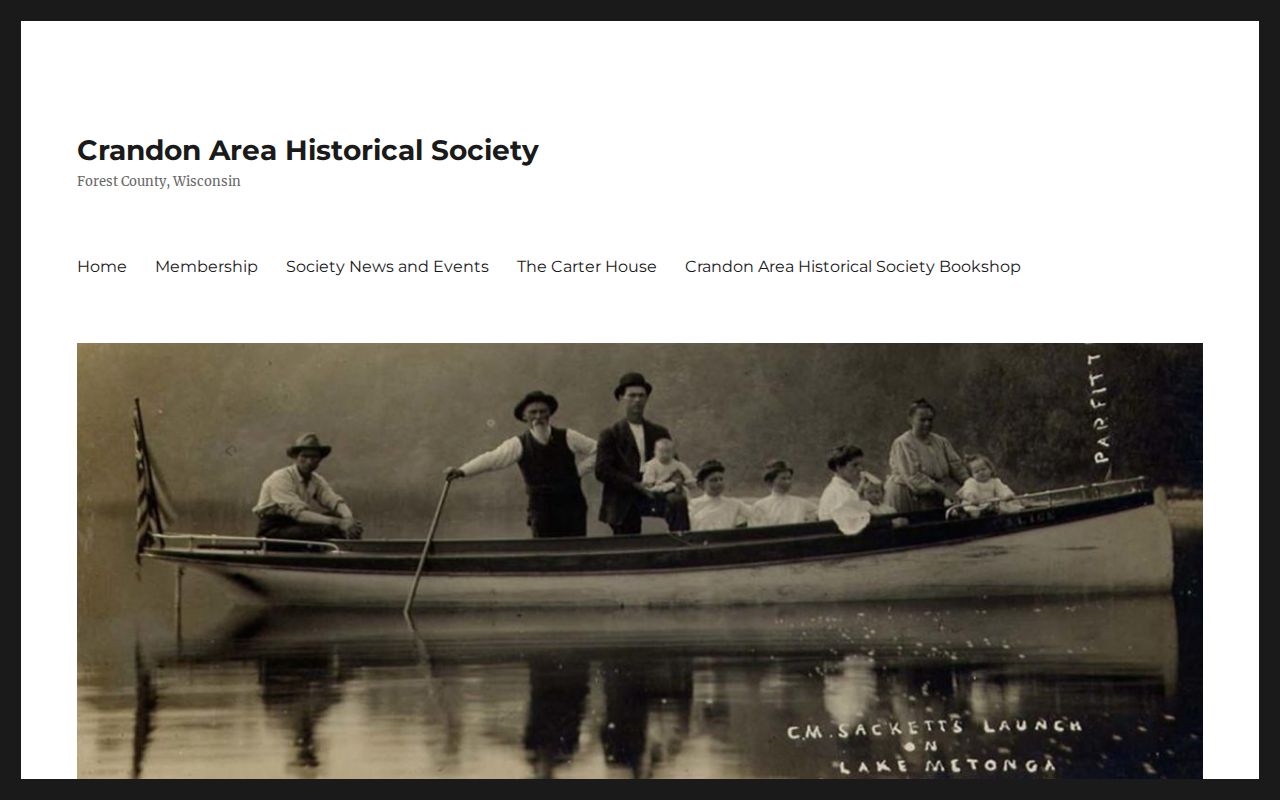
Crandon Public Library's Local History Room holds a 1909 Crandon census, 1940 Forest County maps, naturalization records, county officer lists from 1887 to 2010, newspapers, and an obituary index. The Crandon Area Historical Society adds obituaries, yearbooks, farm histories, and archive material. Together these files can explain a surname. But the property records settle the parcel itself. A deed or probate order matching the legal description is what establishes the transfer, so treat the archives as clues rather than conclusions. The library local-history page describes its holdings.
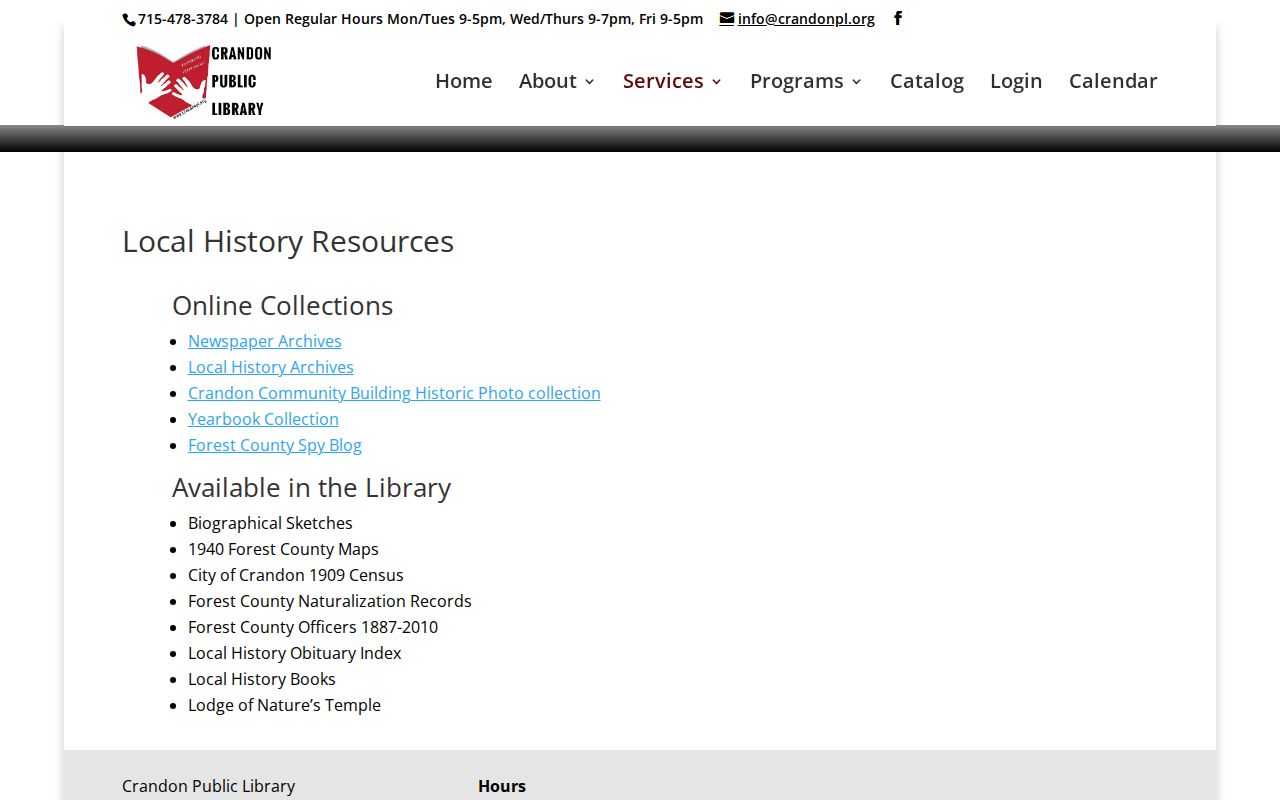
Match any archival name or map reference back to Forest County's deed and tract records before drawing a conclusion. The Historical Society obituary index offers another lead.
An obituary offers dates and family names. It proves nothing about land. Wisconsin's vital records follow their own rules. The state keeps no general vital-record index online. Access runs in person under eligibility limits. The DHS genealogy access table spells out the index periods for birth, death, marriage, and divorce records. Read it before you request anything. A death date or a maiden name can open a family-history lead nicely. Still, only a deed or a probate file ties that person to Forest County land. Genealogy clues guide the search; the recorded chain closes it.
Those access windows tell you where a historical record can be consulted. Treat them as consultation rules, not a title index you can search without limit.
Forest County Plats and Surveys Help Place Earlier Owners
Old maps answer a different question than deeds do. The Wisconsin Historical Society's digitized plat-book collection holds a Forest County map. It covers Hiles, Crandon, and Nashville. The county publishes a 2025 Plat Book as well. Its NCWRPC survey site carries survey, right-of-way, and tie-sheet files. A historical plat decodes the lot, block, road, and access language in an older deed. It cannot trace ownership on its own.
Compare each plat against the legal description on every instrument. Street names outlive tax addresses. A lot may have been resurveyed or described in different words decades apart. Forest County publishes no reverse-directory run and no street renumbering chronology. So lean on recorded maps and courthouse files instead of guessing.
Walk a Forest County Grantor-Grantee Chain in Reverse
The party index rewards patience. Run it in reverse. Start with the newest deed on the parcel, copy the grantor and the legal description, then hunt for that same grantor as grantee on an earlier conveyance. At every step, check the names, the dates, the record type, and the parcel language. A missing link online rarely means a broken chain. Compare the handwritten index and tract book against any document number or volume and page reference you have.
- Find the latest recorded deed where the current grantee received the parcel.
- Copy the grantor, deed date, legal description, and reference number.
- Search that prior grantor as grantee and match the same parcel.
- Repeat until the computer index is incomplete, then ask for tract or handwritten party books.
- Grantor / grantee
- Parties named as transferring and receiving the interest.
- Chain of title
- Earlier conveyances linked to the same parcel description.
- Legal description
- Land wording that can remain useful when an address changes.
How Far Back Forest County Ownership Records Reach
Scanned deed images reach back to Volume 1, Page 1. Computer party data does not go as deep. Handwritten grantor-grantee entries end on February 26, 1993. Tract books stop on December 31, 2012. Earlier computerized party data was only partly back-entered. No courthouse fire or lost-book event appears in county history. So an online gap is a gap, not a documented records loss. Ask the Register of Deeds which older volume or tract reference fits your parcel.
Lawful use. Former-owner research in Forest County supports house history, title work, estate questions, and property diligence. Do not use names or addresses from records to track, threaten, harass, or harm a living person.